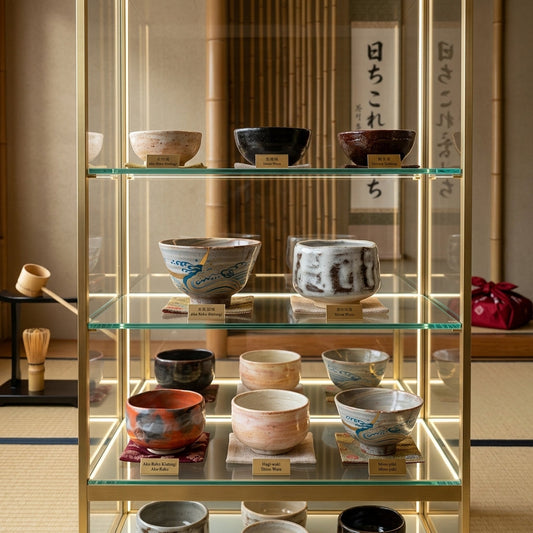
When people first discover matcha, they often focus on terms such as ceremonial grade, color, origin, or harvest season.
But there is another factor that can dramatically influence the flavor, aroma, color, sweetness, and umami of matcha:
the tea cultivar.
Just as different grape varieties such as Chardonnay, Pinot Noir, and Cabernet Sauvignon create very different wines, different Japanese tea cultivars can produce remarkably different expressions of matcha.
Japan has developed an extraordinary diversity of tea cultivars through centuries of tea culture, shade-growing techniques, agricultural selection, and modern plant breeding.
From the familiar Yabukita to richly sweet Saemidori, deep-green Okumidori, aromatic Tsuyu Hikari, and rare Uji cultivars such as Asahi and Uji Hikari, each cultivar contributes its own character to the final bowl.
So why did Japan develop such a sophisticated cultivar culture around matcha?
The answer begins hundreds of years ago.
1. The Historical Roots of Matcha: Preserving a Powdered Tea Tradition
The story of matcha does not begin in Japan.
Powdered tea drinking developed in China, with early forms appearing during the Tang dynasty and becoming particularly sophisticated during the Song dynasty.
During the Song period, finely powdered tea was mixed with hot water and whisked into a frothy drink through a preparation style known as Dian Cha (点茶) — an important historical predecessor of modern matcha preparation.
Around 1191, the Zen monk Eisai returned to Japan from China with tea seeds and knowledge of powdered tea preparation. Tea gradually became associated with Zen practice and later with Japan's evolving tea culture.
Over the following centuries, powdered tea drinking declined in China as loose-leaf brewing became dominant.
Japan, however, continued to develop the tradition.
Through the influence of tea masters including Sen no Rikyu, powdered tea became deeply integrated into Chanoyu — the Japanese Way of Tea.
This uninterrupted demand for exceptional powdered tea gave Japanese growers a powerful reason to continually improve the plants used to produce it.
And that eventually contributed to the development and preservation of specialized tea cultivars particularly suited to Tencha and Matcha.
2. The Shading Revolution: How Ooishita Saibai Changed Matcha
One of the most important innovations in Japanese tea history was the development of Ooishita Saibai (覆下栽培) — shade cultivation.
The technique became closely associated with Uji, Kyoto, where growers began covering tea gardens before harvest to limit direct sunlight.
Historical sources place the development of this distinctive Uji shading method around the latter half of the 16th century.
Today, tea intended for high-quality Tencha is typically shaded for the final weeks before harvest.
Why shade tea plants?
Reducing sunlight changes the chemistry of the leaves.
Under shade, tea plants retain higher levels of amino acids associated with sweetness and umami, particularly L-theanine, while reducing the development of some of the more bitter and astringent compounds associated with direct sunlight.
Shading also encourages greater chlorophyll accumulation, contributing to the intense green color prized in high-quality matcha.
The result is tea with:
- deeper green color
- stronger umami
- softer bitterness
- greater sweetness
- distinctive shade-grown aroma
But shade cultivation also places considerable stress on the tea plant.
This created another challenge:
Which tea plants perform best under shade?
That question eventually became one of the drivers behind Japanese tea cultivar selection.
3. From Zairai to Cultivars: Japan's Tea Breeding Revolution
Historically, many Japanese tea gardens were grown from seed.
These naturally diverse seed-grown populations are generally referred to as Zairai (在来).
Because every seed-grown tea plant is genetically different, a Zairai field can contain considerable variation in:
- leaf shape
- growth timing
- aroma
- flavor
- color
- yield
- resistance to cold and disease
That genetic diversity can be fascinating, but it also makes consistent production difficult.
Beginning in the modern era, Japanese researchers and growers increasingly selected outstanding individual plants and reproduced them vegetatively through cuttings.
This allowed farmers to create fields of genetically consistent tea plants.
These selected varieties became known as cultivars.
Rather than breeding tea solely for maximum yield, Japanese tea development increasingly considered characteristics suited to different styles of tea, including Sencha, Gyokuro, Tencha, and Matcha.
For matcha production, desirable characteristics can include:
- excellent performance under heavy shading
- high amino-acid content
- low bitterness and astringency
- intense green color
- fine leaf structure suitable for Tencha processing
- distinctive aroma
- appropriate harvest timing
- resistance to frost and disease
The result is the remarkable diversity of Japanese tea cultivars we know today.
4. Matcha Cultivars: The Flavor Palette Behind the Bowl
One of the most common misconceptions about matcha is that any Japanese green tea leaf can simply be ground into powder and called matcha.
True matcha is produced from Tencha, and the cultivar used to grow that Tencha can dramatically influence the final experience.
Think of cultivars as the flavor palette of the tea farmer and tea master.
Here are several important cultivars you may encounter.
Yabukita
Common regions: Shizuoka and throughout Japan
Yabukita is by far the most widely cultivated Japanese tea cultivar and became the benchmark cultivar of the modern Japanese tea industry.
It is prized for its adaptability, reliable quality, and balanced flavor.
In matcha, Yabukita can offer:
- fresh vegetal aroma
- pleasant umami
- moderate sweetness
- refreshing astringency
- a clean, structured finish
Because of its stronger character, Yabukita is also extremely useful in blends, where it can add structure and aroma.
Okumidori
Common regions: Kyoto, Shizuoka, Aichi, Kagoshima
Okumidori is a later-budding cultivar developed from Yabukita and a Shizuoka native selection.
Its name can be interpreted as “deep green” or “late green,” an appropriate description for a cultivar famous for its beautiful color.
Okumidori is particularly valued for:
- deep jade-green color
- smooth mouthfeel
- gentle sweetness
- clean umami
- relatively low astringency
Its late budding also helps growers diversify harvest timing and reduce exposure to spring frost.
For these reasons, Okumidori has become particularly popular for high-quality Tencha and ceremonial-style matcha.
Saemidori
Common regions: Kagoshima, Kyushu, and increasingly Kyoto
Saemidori is one of the most visually striking Japanese cultivars.
It is a cross between Yabukita and Asatsuyu, combining characteristics of two highly respected tea lines. Matcharu's cultivar guide highlights Asatsuyu's exceptionally bright green appearance and naturally sweet character, while Yabukita contributes structure and umami.
The name Saemidori roughly evokes the idea of a brilliant or vivid green.
Typical characteristics include:
- exceptionally bright jade-green color
- pronounced sweetness
- rich umami
- creamy mouthfeel
- very low bitterness when carefully cultivated
Saemidori is particularly attractive for drinkers who prefer matcha that is naturally sweet, elegant, and approachable.
Its vivid color also makes it visually impressive when prepared as Usucha, and it performs beautifully in premium matcha beverages.
Tsuyu Hikari
Common regions: Shizuoka and other specialty-growing regions
Tsuyu Hikari is a particularly interesting cultivar for aroma lovers.
It was developed from Shizu-7132 and Asatsuyu.
Shizu-7132 is known for a distinctive aromatic character often associated with cherry blossom, while Asatsuyu contributes sweetness, rich umami, and vivid color.
At Matcharu, we describe this combination as bringing together the fragrance of cherry blossom and the sweetness of dew.
Depending on cultivation and processing, Tsuyu Hikari can offer:
- floral aroma
- gentle sakura-like fragrance
- rich sweetness
- rounded umami
- distinctive lingering finish
Some lots can reveal surprisingly deep aromatic notes that may suggest sweet florals, cocoa, or chocolate-like richness.
For people who enjoy exploring matcha through aroma rather than simply intensity of umami, Tsuyu Hikari can be especially fascinating.
Asahi
Famous region: Uji, Kyoto
Asahi is one of the legendary cultivars associated with premium Uji Tencha.
It has relatively large, thin leaves and is particularly suited to Tencha rather than rolled teas.
Production can be demanding and yields are limited, but carefully cultivated Asahi is renowned for:
- exceptional refinement
- elegant umami
- creamy texture
- beautiful color
- sophisticated aroma
Asahi is frequently associated with competition-grade Tencha and some of the highest levels of traditional Japanese matcha production.
For serious matcha enthusiasts, Asahi is often considered one of the cultivars worth experiencing at least once.
Uji Hikari
Famous region: Uji, Kyoto
Uji Hikari is another highly respected Kyoto cultivar grown in relatively limited quantities.
It can produce both exceptional Gyokuro and Tencha.
Its character is often described as:
- refined sweetness
- elegant umami
- minimal bitterness
- light, brilliant green color
- delicate finish
Like Asahi, it is not primarily about aggressive flavor.
Its appeal comes from balance, finesse, and refinement.
Samidori
Famous region: Uji, Kyoto
Samidori is an important traditional Uji cultivar and deserves special attention when discussing matcha.
It is valued for both Tencha and Gyokuro and offers:
- vivid green color
- deep but elegant umami
- gentle sweetness
- floral or refined aromatic character
Among traditional Kyoto cultivars, Samidori is one of the more widely cultivated and has long played an important role in Uji-style matcha.
Yutaka Midori
Common region: Kagoshima and southern Japan
Yutaka Midori thrives particularly well in warmer southern tea-growing regions.
It is known for:
- strong body
- rich vegetal flavor
- deep green color
- good sweetness
- strong presence in milk-based drinks
Because of its intensity, Yutaka Midori can work particularly well in both everyday matcha and culinary or latte applications.
Matcha Cultivar Flavor Guide
| Cultivar | Typical Character | Best For |
|---|---|---|
| Yabukita | Balanced, fresh, vegetal, lightly astringent | Everyday matcha, blends |
| Okumidori | Smooth, deep green, gentle umami | Ceremonial matcha |
| Saemidori | Very sweet, vivid green, creamy | Usucha, premium ceremonial |
| Tsuyu Hikari | Floral, aromatic, sweet, distinctive | Single-cultivar exploration |
| Asahi | Refined, creamy, elegant umami | Premium / competition-style matcha |
| Uji Hikari | Delicate sweetness, refined umami | High-end ceremonial matcha |
| Samidori | Traditional Uji character, sweet and umami-rich | Ceremonial matcha |
| Yutaka Midori | Bold, rich, vegetal | Latte and everyday drinking |
Important: Cultivar is only one part of matcha quality. Terroir, shading, harvest date, fertilizer management, Tencha processing, storage, milling, and the skill of the producer can influence the final cup just as much.
5. Single-Cultivar Matcha vs. Blended Matcha
Today, single-cultivar matcha has become increasingly popular.
It allows the drinker to experience the character of one cultivar in much the same way that single-origin coffee allows us to explore the personality of a particular origin or variety.
But traditionally, some of Japan's greatest matcha is not single cultivar at all.
It is blended.
And that brings us to one of the most sophisticated skills in Japanese tea making.
6. Gogumi: The Art of Matcha Blending
Japanese tea masters, or Chashi (茶師), have traditionally played an important role in evaluating, selecting, and blending teas.
The Japanese art of blending is called Gogumi (合組).
Rather than considering blending a way to hide inferior tea, an accomplished tea master can use different teas almost like a composer uses different musical instruments.
For example, a blend might use:
Okumidori
for smoothness and deep green color
Yabukita
for aroma and structure
Saemidori
for sweetness and brilliant color
The objective is not simply complexity.
The goal is balance.
A skilled Chashi may combine different cultivars, tea gardens, harvest lots, or processing characteristics to create a matcha with a consistent and recognizable personality.
This is also why the Japanese cultivar ecosystem is so valuable.
Each cultivar becomes a different note in the tea master's palette.
7. Is Single-Cultivar Matcha Better?
Not necessarily.
This is an important distinction for anyone beginning to explore premium matcha.
Single-cultivar matcha
Best when you want to explore:
- cultivar character
- terroir
- aroma differences
- seasonal variation
- the personality of a particular tea garden
Blended matcha
Best when you value:
- balance
- consistency
- complexity
- a flavor profile carefully designed by a tea master
Neither is inherently superior.
A superb blend created by an experienced Chashi may be far more sophisticated than an average single-cultivar matcha.
Similarly, an exceptional single-cultivar Asahi, Saemidori, or Uji Hikari can offer an experience that would disappear if blended with other teas.
The pleasure is in discovering both.
8. How to Choose a Matcha Cultivar
If you are new to cultivar-focused matcha, you can begin by choosing according to the flavor experience you enjoy.
If you love sweetness and very little bitterness:
Try Saemidori.
If you want smoothness, beautiful color, and balanced umami:
Try Okumidori.
If aroma is most important to you:
Explore Tsuyu Hikari.
If you prefer a traditional, fresh Japanese green tea character:
Try Yabukita.
If you are looking for refined, high-end Uji matcha:
Look for Asahi, Uji Hikari, or Samidori.
The more cultivars you taste side by side, the easier it becomes to recognize their personalities.
And that is when matcha becomes much more interesting than simply “green tea powder.”
Final Thoughts: Matcha Is Not One Flavor
One of the most fascinating things about Japanese matcha is that there is no single “matcha flavor.”
Behind every bowl is a combination of:
Cultivar + Terroir + Shading + Harvest + Tencha Processing + Blending + Milling
Change any one of those variables, and the experience can change dramatically.
Japan's extraordinary diversity of tea cultivars is the result of centuries of tea culture, agricultural experimentation, and an ongoing pursuit of better flavor.
From the vivid sweetness of Saemidori, to the deep smoothness of Okumidori, the floral personality of Tsuyu Hikari, or the extraordinary refinement of traditional Uji cultivars such as Asahi and Uji Hikari, every cultivar tells a different story.
And understanding those cultivars gives us a much deeper appreciation of what is actually inside a bowl of matcha.
Explore Matcha Cultivars
Want to learn more about individual Japanese tea cultivars and how they influence matcha?
Explore our Matcha Cultivar Guide, including Saemidori and Tsuyu Hikari:
Explore Matcharu's Matcha Cultivars Guide

Tags: